

Tweed Holiday Parks
Tweed Holiday Parks
Tweed Holiday Parks is the perfect place to relax, unwind and make memories.

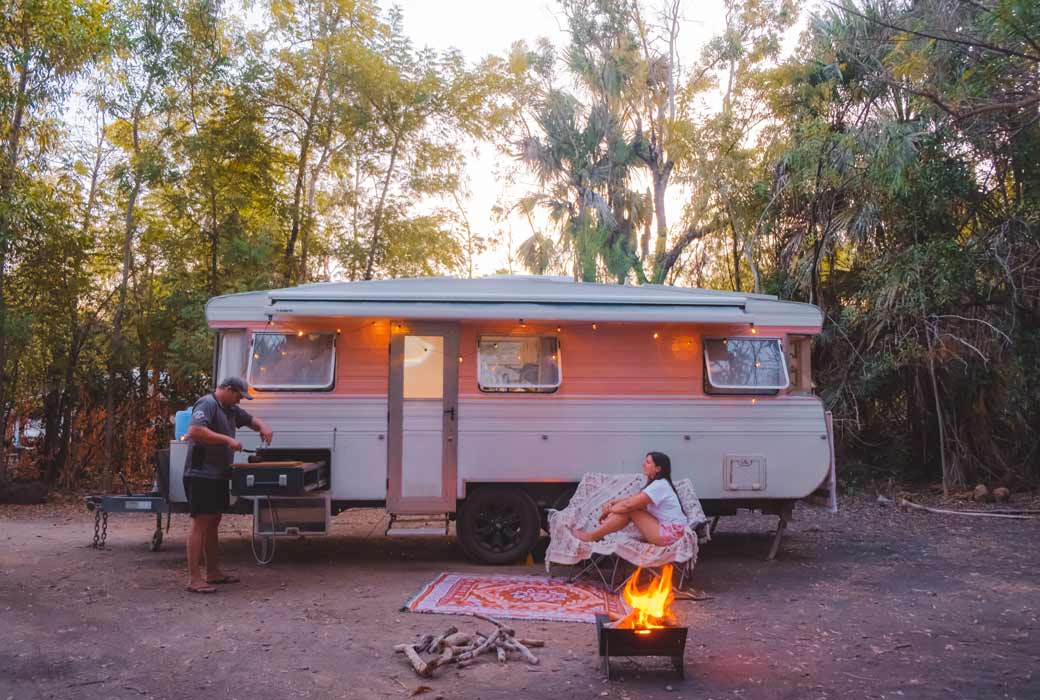
With her heart set on travelling Australia in a vintage caravan, Emma Shaw embarked on a mammoth renovation.
“We were planning a lap around Australia when we fell in love with the idea of a vintage caravan renovation. My husband and I kept seeing images of beautifully rebuilt ‘vans – light and white on the inside, painted pretty colours on the outside – and the idea started to grow that this could be the perfect way for us to explore the country.
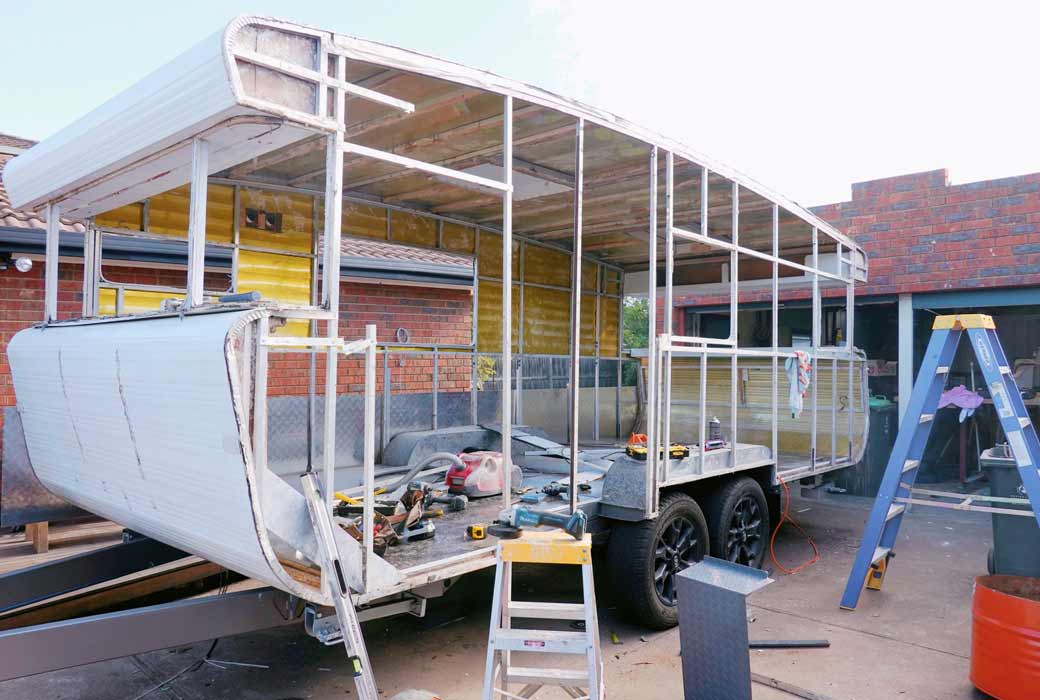
We started with a 19.5-foot-long, dual-axle 1980s Viscount with wraparound windows. We never planned to completely pull our ‘van apart, but as we started getting into the renovation it quickly became clear that it was probably the best way to make it work. Our rebuild started with a new chassis to lift the ‘van and get it off-road ready. We had the new chassis built straight onto the bottom of the ‘van by a trailer-building company. This gave it extra strength by using the chassis frame that was already there.
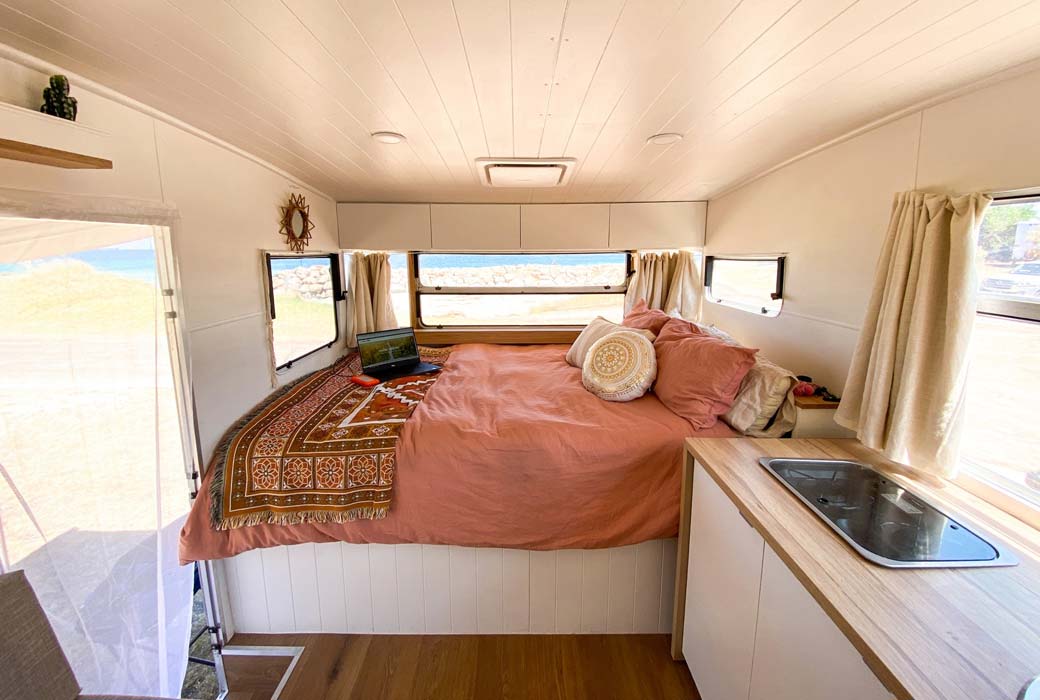
The outside of the ‘van definitely took up most of the renovation time. We removed the old air conditioner at the front and replaced it with full-length double windows and moved the door over a little bit so we could fit our bed and another window. Because we moved the door, we also ended up changing the cladding on the two sides, so for a while, our ‘van was a skeleton – just a frame on a chassis. We added aluminium checker plate (textured sheet metal) to the bottom third of the ‘van to make it stronger for off-road conditions. We also gave the ‘van a paint and a pretty pink stripe down the sides. We removed the windows and replaced the glass with super-strong plastic. We replaced the old roof frame with metal battens to support the weight of the air conditioner, added four solar panels to make our ‘van self-sufficient and created a new roof out of aluminium composite sheeting. We spent seven months of working on the outside of our caravan.
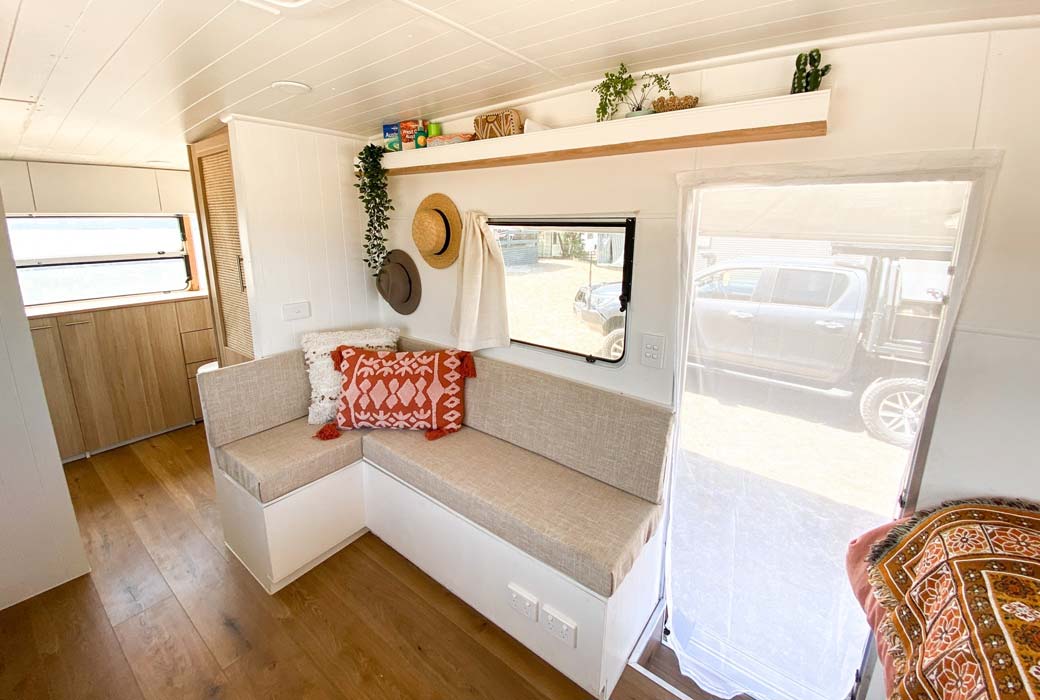
Once we started building the inside of the ‘van, things started to move a lot faster. We installed a pull-out kitchen so we could cook most of our meals outside while we were on the road. We added a shower and a toilet to the back of the van, an awning to the outside, and some boxes to the front. While it was quite a rush to finish, we finally did it and were ready to go.”
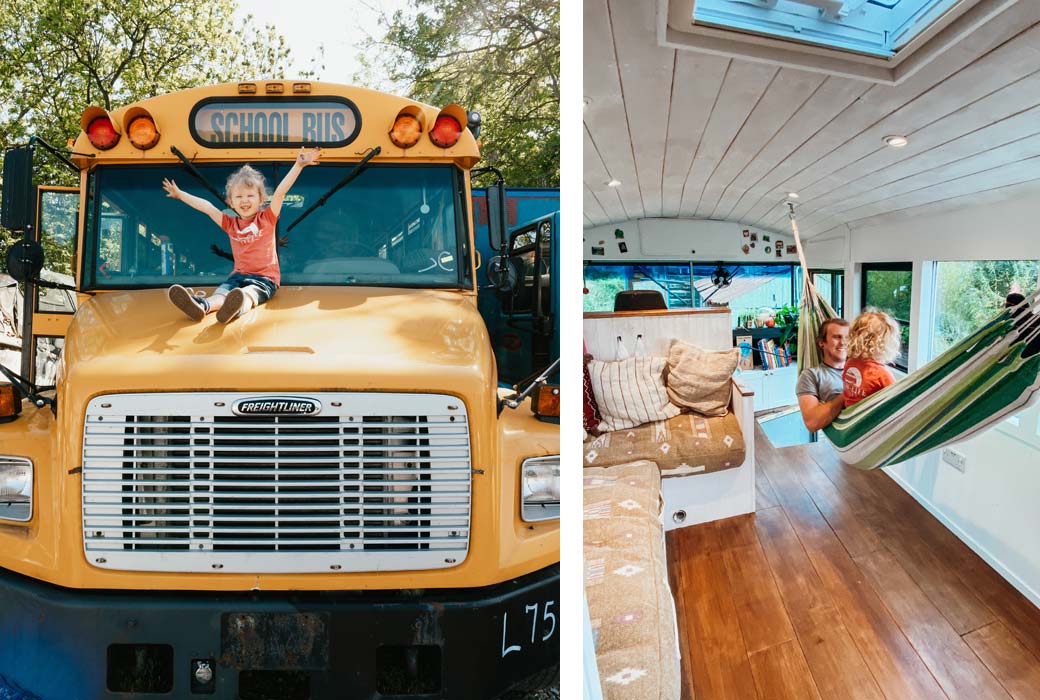
The Dixs’ – Sam, Rachel, Ellis and Bodhi – are on a quest to live wild and free in an off-grid, converted American school bus
What is your favourite ‘little touch’?
Our favourite ‘little touch’ has to be the two ceiling hooks in the living area.
What makes this caravan renovation special?
It doesn’t sound like much, but these two hooks are entirely inconspicuous, and yet we can do so much with them!

Did it change the design and function of the overall van?
Yes, absolutely. We can hang a hammock so that alongside the sofa bed, we can accommodate three to four overnight guests. Additionally, we can connect two swinging chairs to create a more social seating area when people visit. The hooks are tiny, and the hammock and swings take up barely any space when folded and stored away neatly under our sofa. And so these two tiny hooks provide versatile functionality while being space-saving, too, which is exactly what you look for when living in a tiny home.
What do the kids love about it?
The hammock and swings provide instant fun, and our toddler just adores swinging on whatever we hang up. And once our little newborn is big enough, we’ll get him a baby swing to hang up, too; it’ll come in handy when we need free hands for five minutes.
Kallie and Dylan Bergamaschi are currently living on the road with their two sons, Lincoln and Zephyr, in a converted bus.
Budget $23,000
Time 6 months
Tell us about the van you started with.
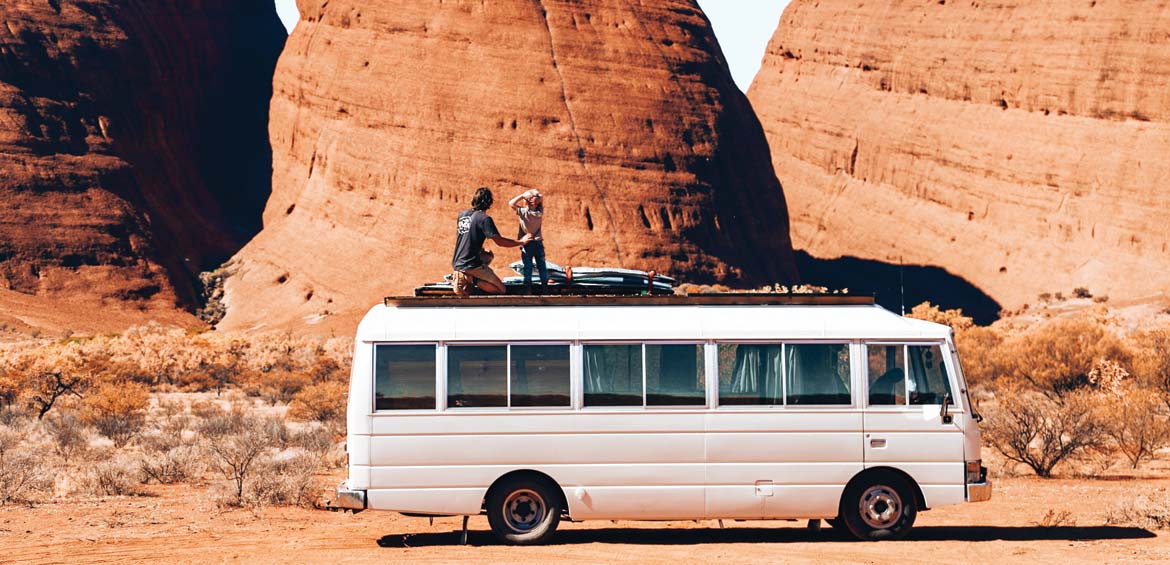
We started with a 1984, 22-seater Nissan Civilian bus. She’s over seven metres long, three tonnes when empty and has an old 3.3-litre non-turbo diesel engine, which had around 155,000 kilometres on the clock at purchase.
What inspired you to do the caravan renovations?
We have always had an itch to travel, but were limited by our full-time jobs. We decided to take the leap and began looking for a vehicle we could renovate into a home on wheels. After looking for a few weeks we finally came across a mid-size bus with a bed and a shelf that could be easily stripped out – she was the perfect clean slate.
What inspired the design?
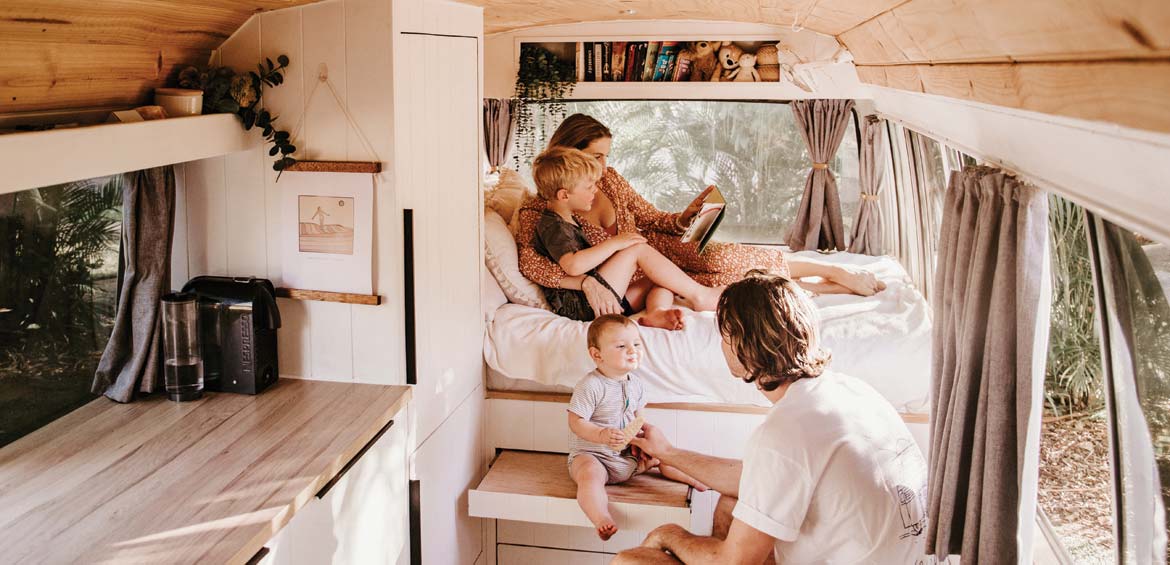
We tried to keep the design as fresh and simple as possible, with as much storage as we could fit into the small space. We chose white to make the space feel open and warm timber to give it an earthy feel.
How much of the reno did you do yourself?
We completed the whole renovation ourselves, with the odd exception of friends and family chipping in. As a concreter, Dylan has experience with tools and he learned the rest as he went along. We did the 12-volt solar power system ourselves, but decided against putting in a gas cooktop or water heating as this requires a licensed gas fitter and would have added additional costs.
Any advice for first timers?
Expect everything to take a little longer than planned; don’t lose hope in the dream; and just keep chipping away – it’s achievable.
Follow on Instagram @slowly.salty
Wollongong mum and photographer, Jen Piazza Vello, always knew her next labour of love was going to be a caravan fixer-upper.
Budget $4,500
Time 12 weeks
Tell us about the van you started with.
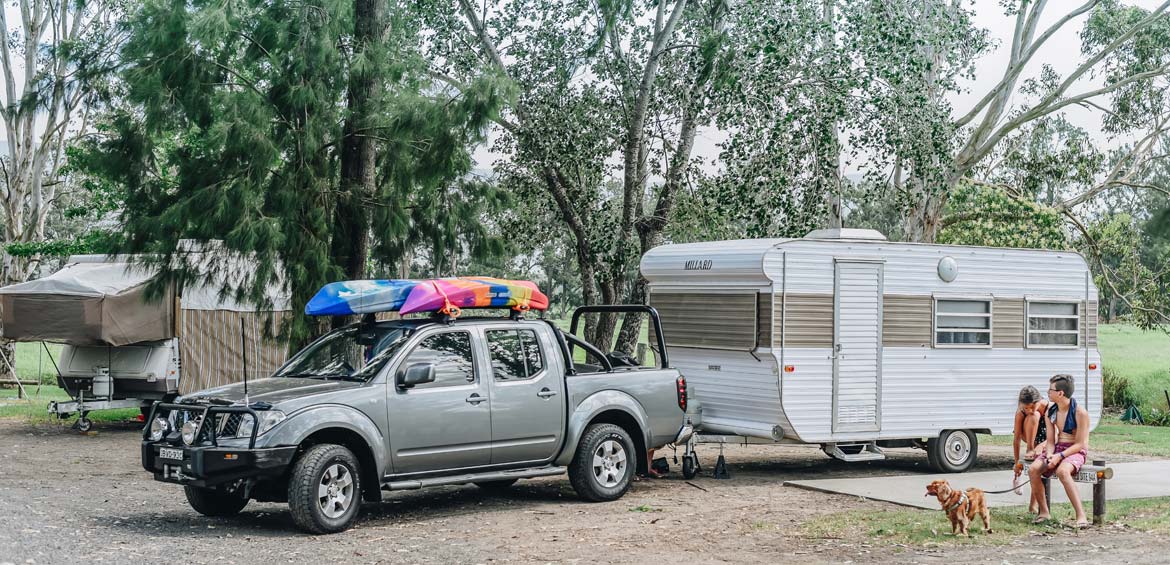
I started my search on Gumtree for the perfect van at the beginning of 2019. I knew what I wanted, down to the layout. When I opened up my search Australiawide, I found a 1975 vintage Millard … it was a musty, old mission brown caravan. A definite blast from the past with its lino tiles, dark laminate woodgrain cabinetry, brown vinyl dining setting and funky lime-green curtains. I was immediately smitten.
What inspired you to do the caravan renovation?
I grew up camping in my dad’s pop top and when I reminisce about those times I always remember the freedom and simple things – I wanted this for my kids. In the end I convinced my other half that life is too short, the kids were growing up quickly and that it would be my project!
Did your design vision match the end result?
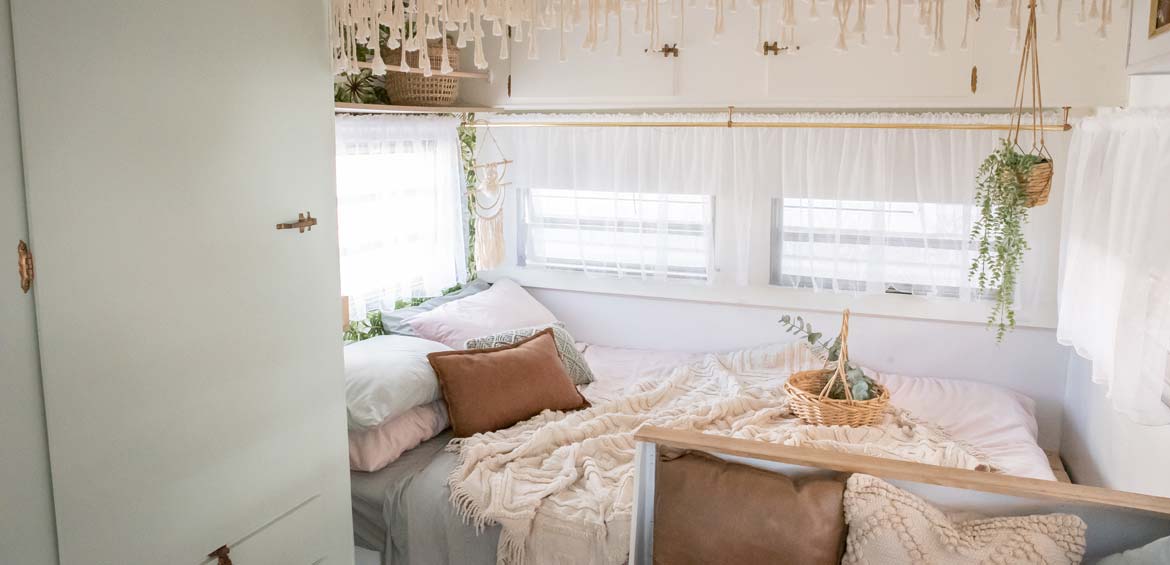
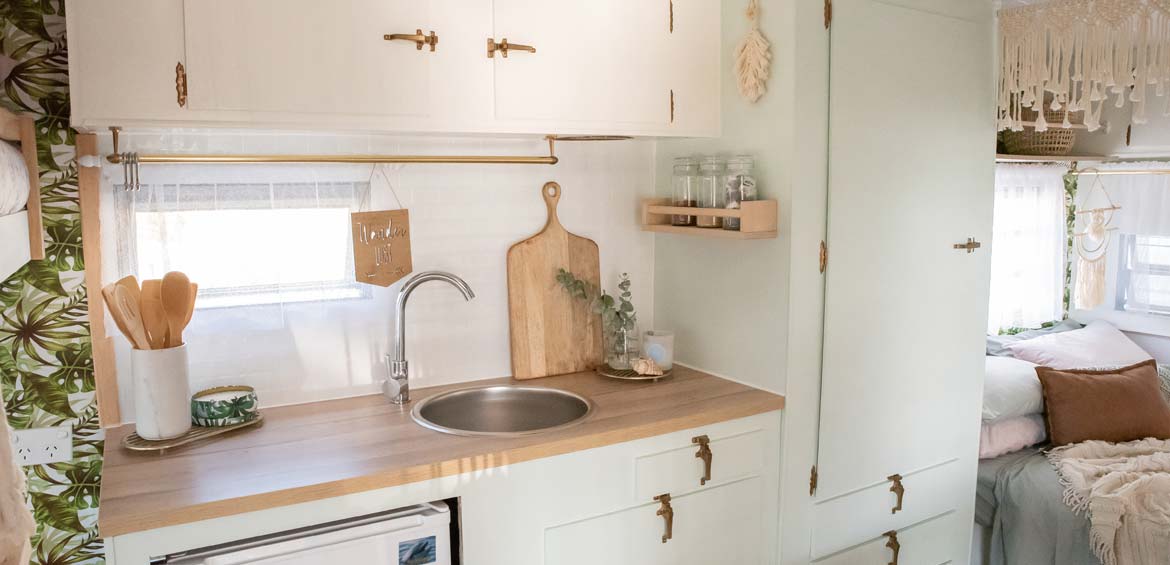
I felt it was important to preserve the unique features of the van, such as its vintage door handles, hinges, cabinetry and light fittings. I also wanted it to have a warm, coastal vibe … the feeling that you are on holiday as soon as you step inside. I love how Millie turned out; I think she is everything I envisaged and a little bit more.
How much of the renovation did you do yourself?
I think in today’s modern world, anyone can DIY. Being van rookies, we had no idea what we were getting ourselves into. Jobs like cleaning the chassis, removing the water-damaged panel and resealing windows were the hardest parts – time-consuming and repetitive. However, we were very lucky and didn’t need to call in the professionals. After these hurdles, the ball started rolling … finally!
What are your favourite features?
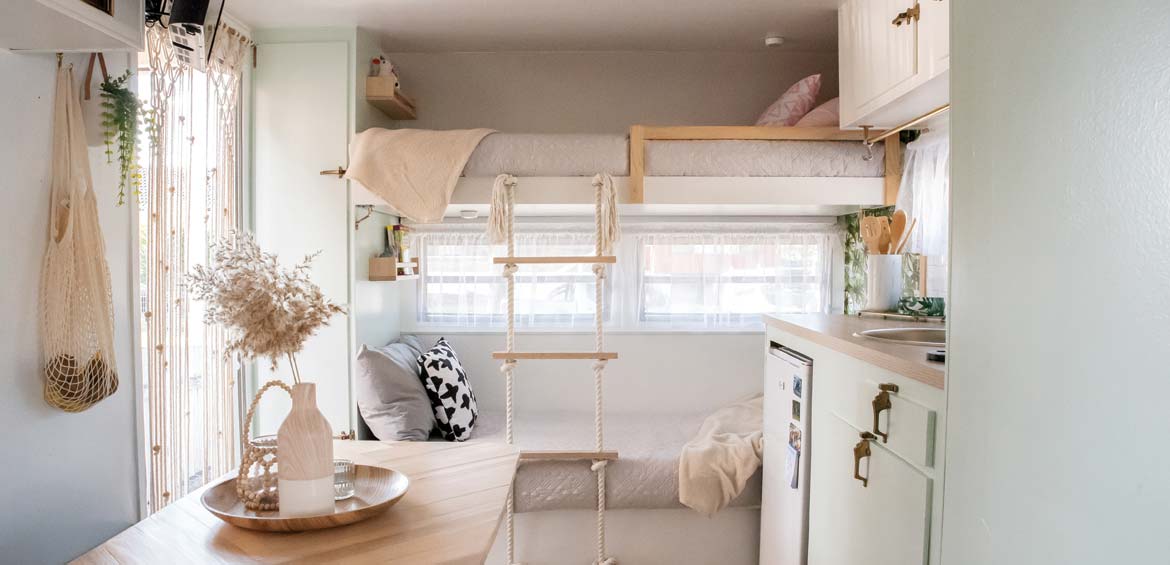
The rope bunk ladder. The van didn’t have one originally and I lost sleep trying to think of something that would be lightweight, slimline and didn’t inhibit our tiny space near the entry. It also ties in aesthetically with all the pops of macramé while also being practical, lifting out of the way so we can make the bunk beds easily. My daughter loves the little shelf at the end of her bed, which she has filled with treasures from our travels.
Follow on Instagram @fortheloveofmillie
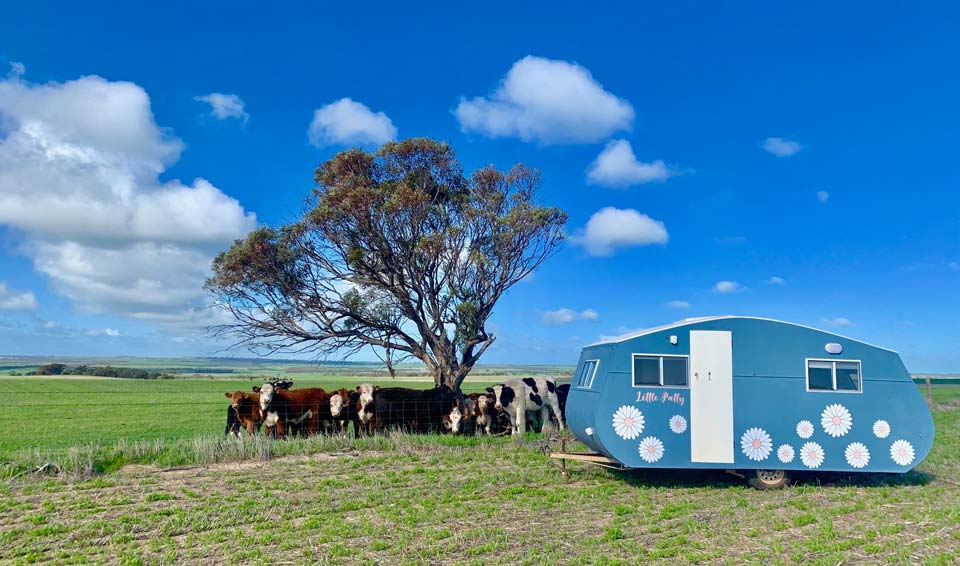
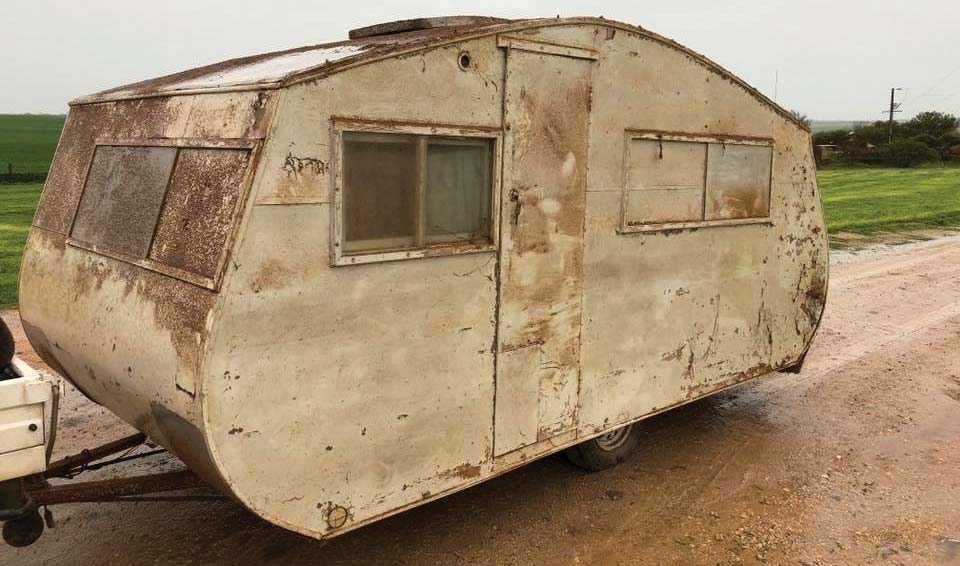
Nicola Adams and her husband, owners of Redwing Farm in South Australia, had the home-renovation experience but wanted a new challenge. The before and after caravan renovation pictures below tell a thousand words on how epic Little Pattys transformation was.
Budget $12,000
Time 10 months
Tell us about the van you started with.
My hubby turned up one day and said one of the local farmers had been showing him around his sheds and among his treasures was a 1950s Furness bondwood caravan. He, of course, had proudly dragged it home. I was slightly horrified, but the kids thought it was terrific, wading through the dirt to point out where their beds would be. After some research, we decided a renovation looked doable and we were keen to show our kids what a bit of hard work and imagination can achieve, so it was a goer!
What inspired the design?
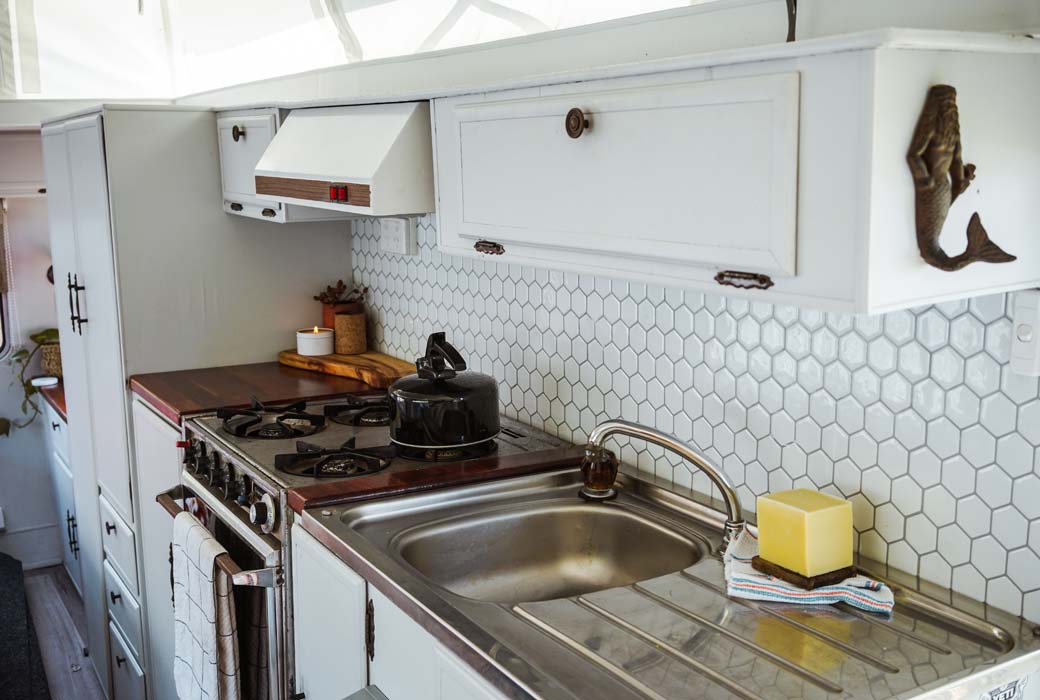
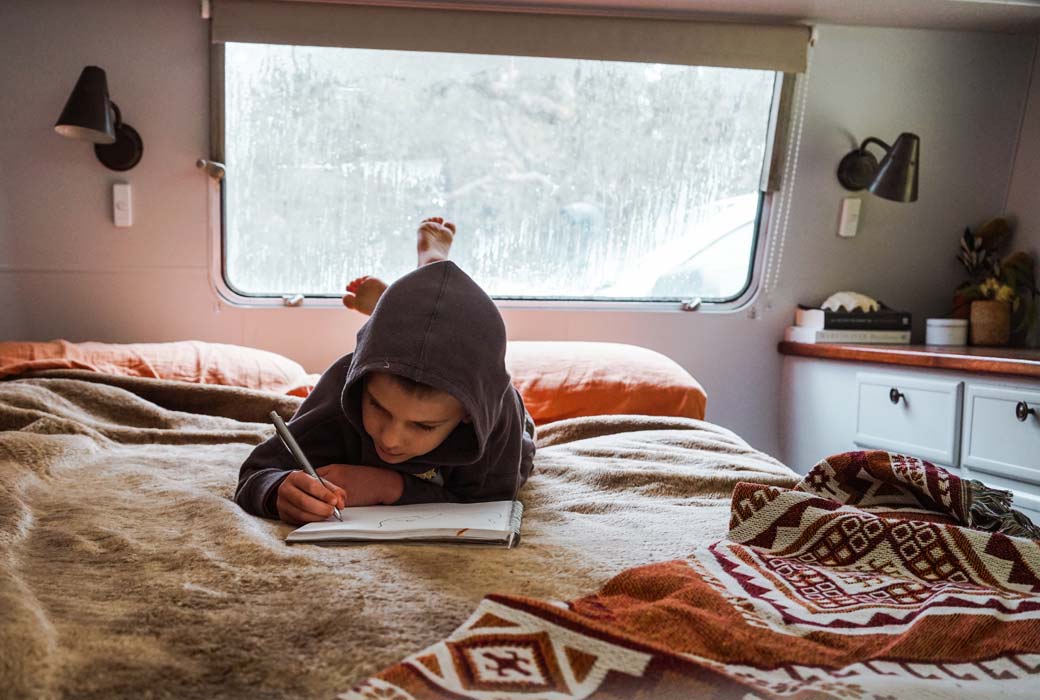
Probably her pine floorboards; I just loved the idea of a bohemian Hamptons beach-house style. Fresh, classic, but also cosy. Of course, I got excited and bought quilts and throws before we’d even started, but having these things is a good way to hang onto the dream. The daisies were just a bit of fun because my daughter loves flowers. We actually have a street artist lined up in a few months to paint greenery all over her!
How much of the reno did you do yourself?
The majority as we wanted to save money and thought we’d just tap away at it with no finish date in mind. Using the internet and a general ‘have a go’ attitude, we eventually worked our way through it. She did need to be totally rewired so my brother, who is a qualified electrician, did that for us. He had never worked on a caravan, let alone a 60-year-old one, so it was a learning curve for him too.
Any advice for first timers?
Never assume it will be a quick flip and consider your budget carefully. Also, while each of the different jobs may be small, altogether it’s a big undertaking, so make sure you have the time to actually enjoy it.
A sustainable van renovation is not only a way to be kind to Planet Earth, it’s also budget-friendly and can add a lot of character and quirk to your home on wheels. The Crawfords, along with their two dogs and lovingly restored vintage Bertie Bus – travel part-time.
Are any elements of your van repurposed, recycled or second-hand?
A lot of the internal structural items in Bertie are second-hand. The timber for our bed frame, benches, dining table and flooring was all destined for landfill. And we used leftover house paint to colour around 80 per cent of the van. A lot of our kitchen and cutlery was also sourced second-hand.
Have you incorporated any green features into the operating of your van?
When we bought Bertie, being nearly 40 years old, she was a ‘plug and play’ van (24V only). We built a full 12V system and installed a water tank and pump to maximise time off-grid. We don’t run air-conditioning and don’t have a fancy lithium battery system or bulky appliances that draw a lot of power.
In what way did you adopt the concept of minimalism into your design?
We are quite minimal at home, and life with Bertie is very much an extension of that: we only use what we need, and generally only have one of everything. When we found Bertie, she had good bones, so most of our renovations were aesthetic. Structurally, she already had everything we needed… she just needed some love
Any tips for other families looking to DIY who want to be as mindful as possible?
Spend time researching a van that suits your family’s needs – don’t rush the process. Focus on restoring what you can instead of just replacing things, especially hinges, handles and light fittings, as these clean up really easily.
Use materials that you may already have, or if you have any tradie mates, ask them if they have anything useful before running off to Bunnings. You can also find a lot of great stuff at second-hand timber yards, or on websites like Facebook marketplace.
When you are on the road, what ways do you try to lessen your footprint?
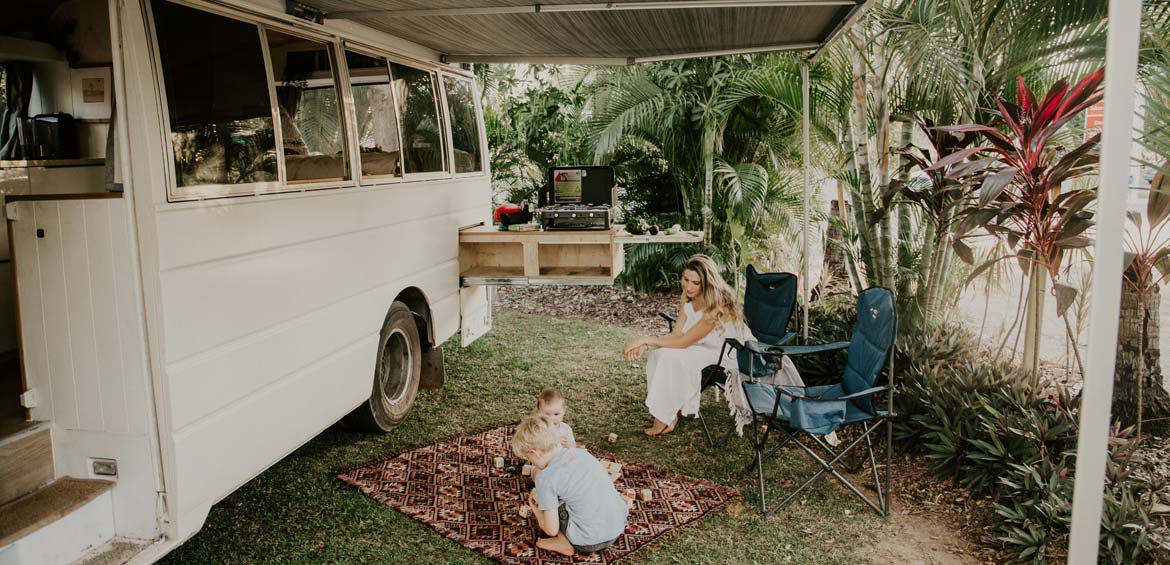
We try to stay off-grid as much as possible; we avoid single-use plastics and buy in bulk where we can; we have a few clear-top canvas bags that are great for storing dried goods like rice, pasta, oats and nuts; and we DIY all of our cleaning products, avoiding unnecessary chemicals.
We also use a Kitchen Block (natural dishwashing soap) for our dishes and laundry, which is great for travelling as it’s not a liquid, so no spills.
On our next trip, we are going to calculate our carbon footprint so we can offset our usage and be completely carbon-neutral in our travels.
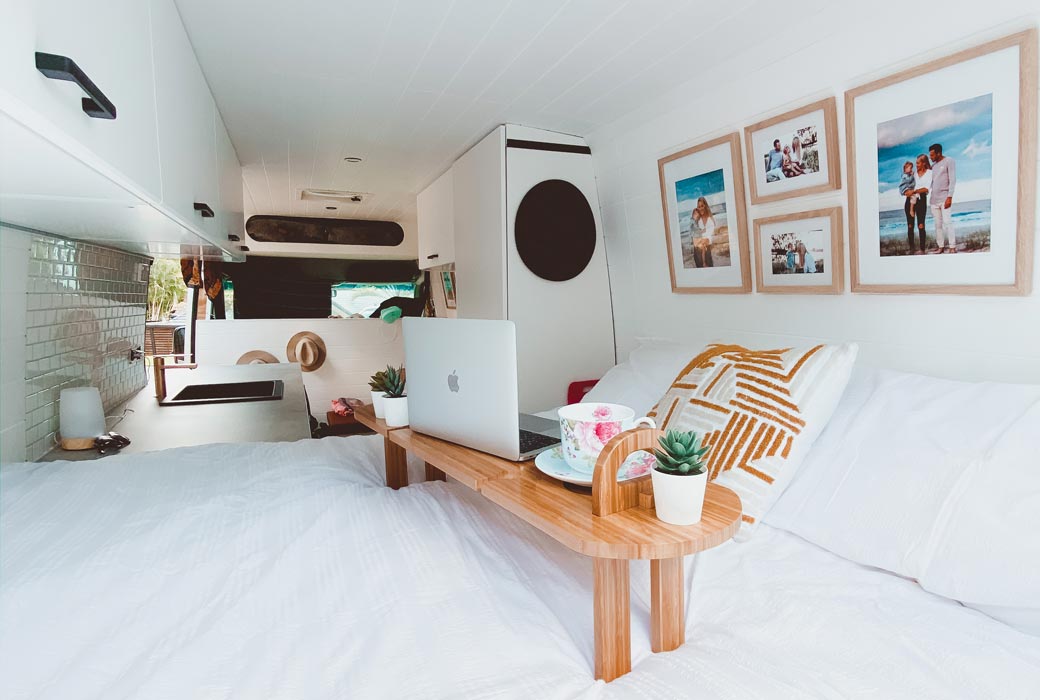
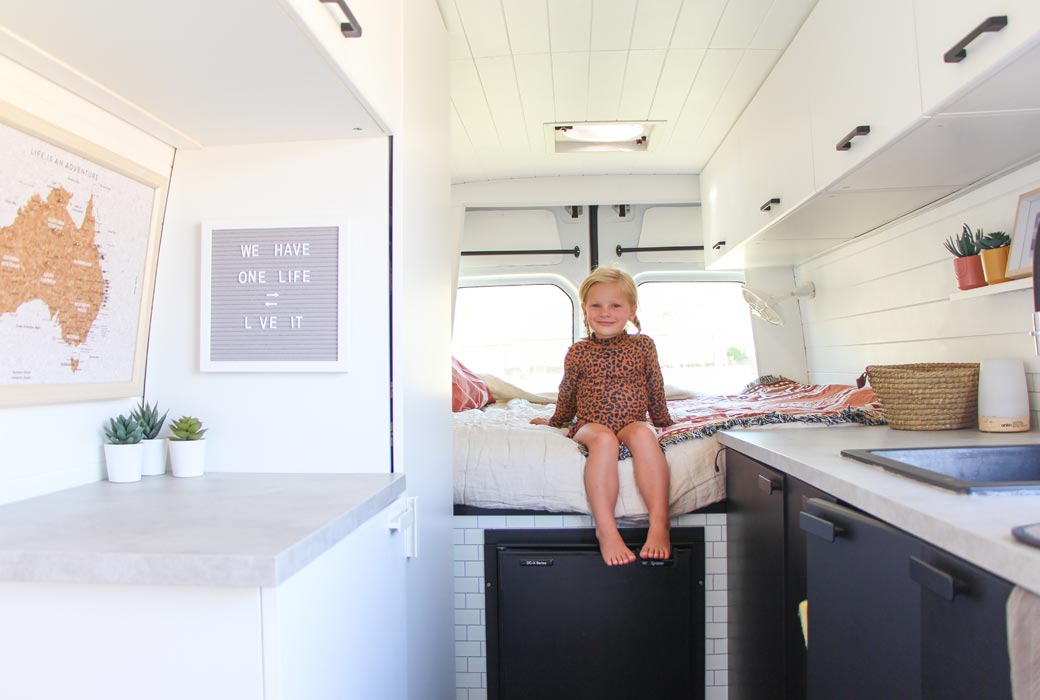
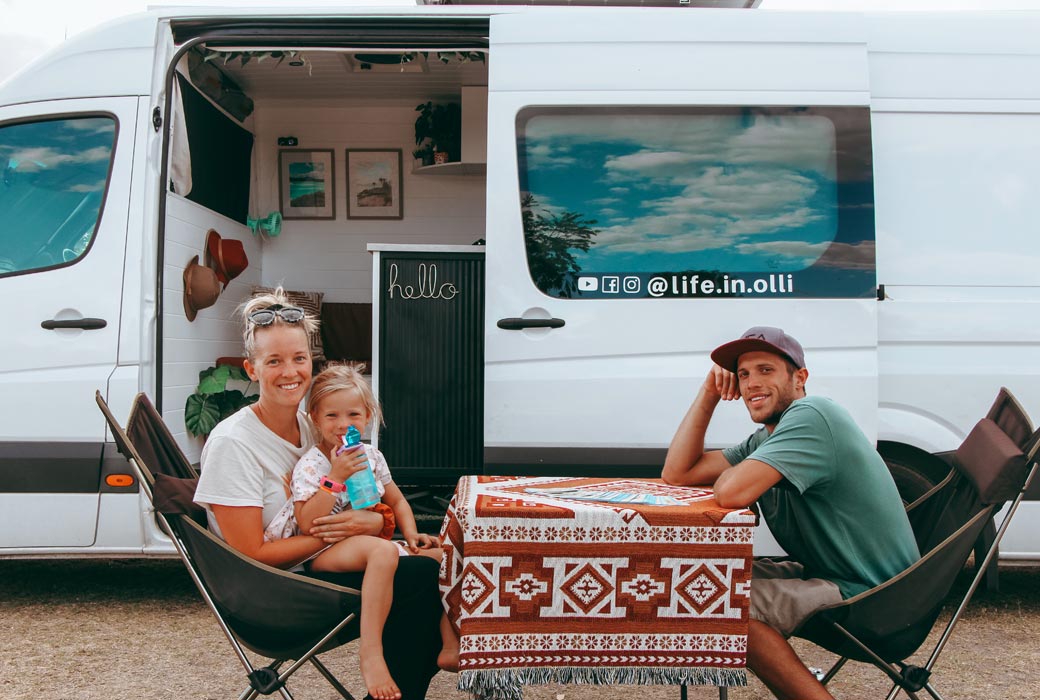
The Gutcheons’ – Mindy, Spencer and Nyah – stopped waiting for the ‘right time’ and moved into their rennovated caravan, OLLI in 2019, and travelled around Australia full time for two years.
Which is your van’s most useful feature?
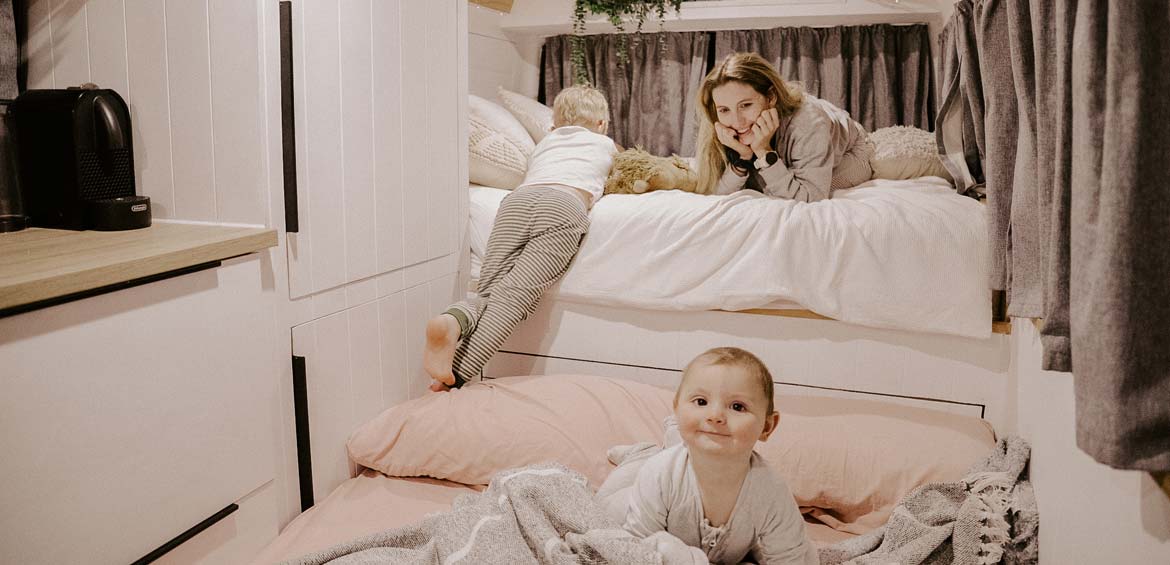
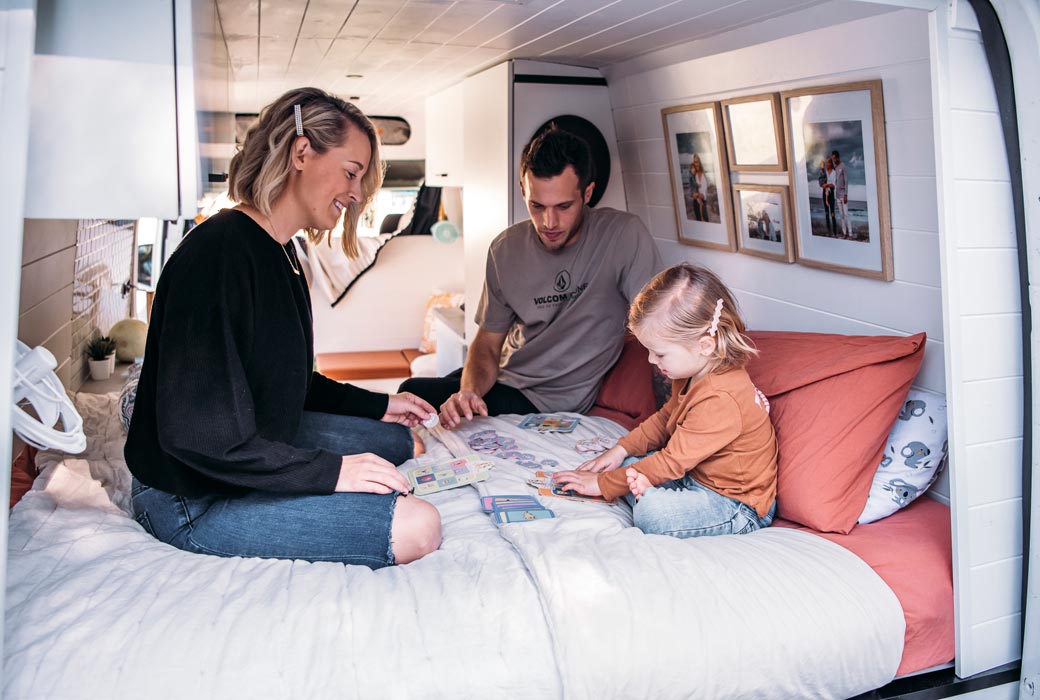
By far the most useful feature in OLLI is Nyah’s little nook. When you live in such a small space, everything has to have multiple purposes. This intimate area is our couch during the day and converts into Nyah’s bed at night. It also houses all her toys and our shoes, as well as our dirty clothes basket – this corner is just so useful.
Which is your favourite little touch?
Our favourite thing about OLLI’s design is all the homely touches we added, such as framed family photos mounted on the walls.
What makes your caravan renovation special?
We love how multifunctional this area is. Also, when you’re sitting on the ‘lounge’, you always have the best view out the side door.
Did it change the design and function of the overall van?
Originally, this area was going to be where Nyah’s car seat would be installed, with a bunk-style bed above. When we decided to have her ride up the front with us, we suddenly gained a lot more space, so we wanted to optimise the area by adding lots of storage under her bed/our couch.
What does Nyah love about it?
This is where all the toys are kept, so every time Nyah makes a friend she always takes them straight there!
Are any elements of your van repurposed, recycled or second-hand?
We custom-built our van with the help of Mindy’s dad, and he is the type of guy who doesn’t throw anything away. Instead, it all lives in his shed, which we recently renamed ‘Poppa’s Little Bunnings’.
This shed saved us hundreds of dollars in supplies. Basically, the exterior cabinets and walls are new, and everything you can’t see was repurposed. For example, we pulled apart cot panels and used the wood to brace a lot of our cabinetry and build boxes to support our batteries, water tank and fridge, and our entire bed frame was built using materials found in the shed.
In what ways did you adopt the concept of minimalism into your design?
We love living a minimalistic life, so moving into the van wasn’t very hard for us. When designing a tiny home, the key trick is simple: everything needs to have more than one purpose. The best example of this in our van is our couch area that turns into Nyah’s bed at night, and also stores all of her belongings underneath.
Any tips for other families looking to do a DIY caravan renovation who want to be as mindful as possible?
Our biggest piece of advice would be to ensure that your set-up has everything you need. Even if you’re building on a budget, investing in a quality power system and a big enough water tank will actually save you money in the long run by enabling you to free camp a lot more. I would also encourage you to search your local ‘buy, swap, sell’ pages for things like insulation or floorboards. Lots of builders sell their offcuts after a build, and you can pick up things really cheap and save them from turning into landfill.
This article originally appeared in Caravan & Camping with Kids magazine. To subscribe to the latest issue, click here.
Read all our tips on caravanning and camping with kids here.

If you live in NSW you can now claim $50 more to spend at restaurants, cafes and tourist...
Read More
Our friends at Reflections Holiday Parks share their top tips to help you and your family stay...
Read MoreBrowse our selection of great family accommodation options around the world